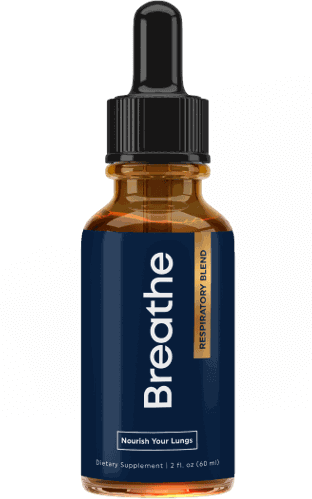
Breathe Ingredients: The Label, Explained
Disclosure: this page contains affiliate links. If you buy through them we may earn a commission at no extra cost to you. It does not change our opinion. This content is for general information and is not medical advice. Learn more.
Breathe publishes its label on the official website, which makes it easier to review honestly. Here's every ingredient, what it does and what the label order tells us about the doses.

The full ingredient list
One serving (1 mL) contains a 550 mg proprietary blend, listed in this order:
- Lemon peel
- Peppermint leaf
- Ginger root (Zingiber officinale)
- Manuka honey
- Mullein leaf extract (Verbascum thapsus)
- Thyme leaf
- Wild-crafted mullein leaf
- Microencapsulated peppermint oil
Other ingredients: water, glycerin, natural flavors and potassium sorbate.
What the order tells us
Ingredients in a proprietary blend must be listed from the largest amount by weight to the smallest. So:
- Lemon peel is the largest single ingredient.
- Mullein extract is fifth, so it can't be more than 110 mg per serving (550 ÷ 5).
- Thyme is sixth: at most about 92 mg.
- The second mullein and the peppermint oil are the smallest components.
For comparison, a teaspoon of honey weighs about 7 grams, more than ten times the whole blend. That's why we describe Breathe as a gentle, low-dose remedy.
Each ingredient in plain English
Lemon peel
Provides flavor and citrus flavonoids. There's no specific evidence it helps the lungs.
Peppermint leaf and peppermint oil
Menthol activates cold receptors in the nose and throat, so breathing feels easier and clearer. Studies show it doesn't measurably improve airflow. Peppermint can worsen acid reflux.
Ginger root
Ginger has anti-inflammatory effects and, in lab studies, relaxes airway muscle. Clinical evidence for lung conditions is limited. It's well known for easing nausea.
Manuka honey
Honey has the best evidence in this formula. Reviews of clinical trials found honey eases cough from colds better than no treatment and about as well as some over-the-counter cough medicines. Manuka honey has extra antibacterial activity in lab tests, but at a small dose in a blend, that matters little.
Mullein
Mullein has been used for coughs for centuries, often as a tea. Lab studies show anti-inflammatory and antiviral activity, but there are very few human trials. See mullein for lungs.
Thyme
Thyme contains thymol and carvacrol. In clinical trials, thyme combined with ivy or primrose reduced coughing fits in acute bronchitis. See honey and thyme for cough.
What's missing
There's nothing in Breathe that's been shown to treat COPD, asthma or lung scarring, or to "cleanse" lungs. That's not a flaw unique to Breathe. No supplement has been shown to do that.
Before you take it: breathing safety checks
- Have COPD, asthma or another lung condition? Keep using your inhalers and prescribed treatment exactly as directed. A herbal supplement can't replace them. Read more.
- Call 911 for severe shortness of breath, chest pain, blue or gray lips, confusion, or being unable to speak in full sentences. See the warning signs.
- See a doctor for a cough lasting more than three weeks, coughing up blood, fever, or breathlessness that's getting worse.
- Acid reflux, diabetes, mint or honey allergy, pregnancy? Check the side effects first.

See the label on the official site
View Breathe →Affiliate link: we may earn a commission at no extra cost to you. Sold only through the official website; ClickBank processes the order.Questions
Does Breathe contain alcohol?
Alcohol isn't listed. The base is water and glycerin.
Is it sugar-free?
No. It contains honey and glycerin, though the amount per 1 mL serving is small.
Who makes Breathe?
The label says it's distributed by Herbal Tea Therapy of Tallmadge, Ohio.